
August 10, 2026
From Manual Handling to 24 Tons per Hour: How MIXSYS Built a Turnkey Thermoplastic Production Plant for DIJ Construction
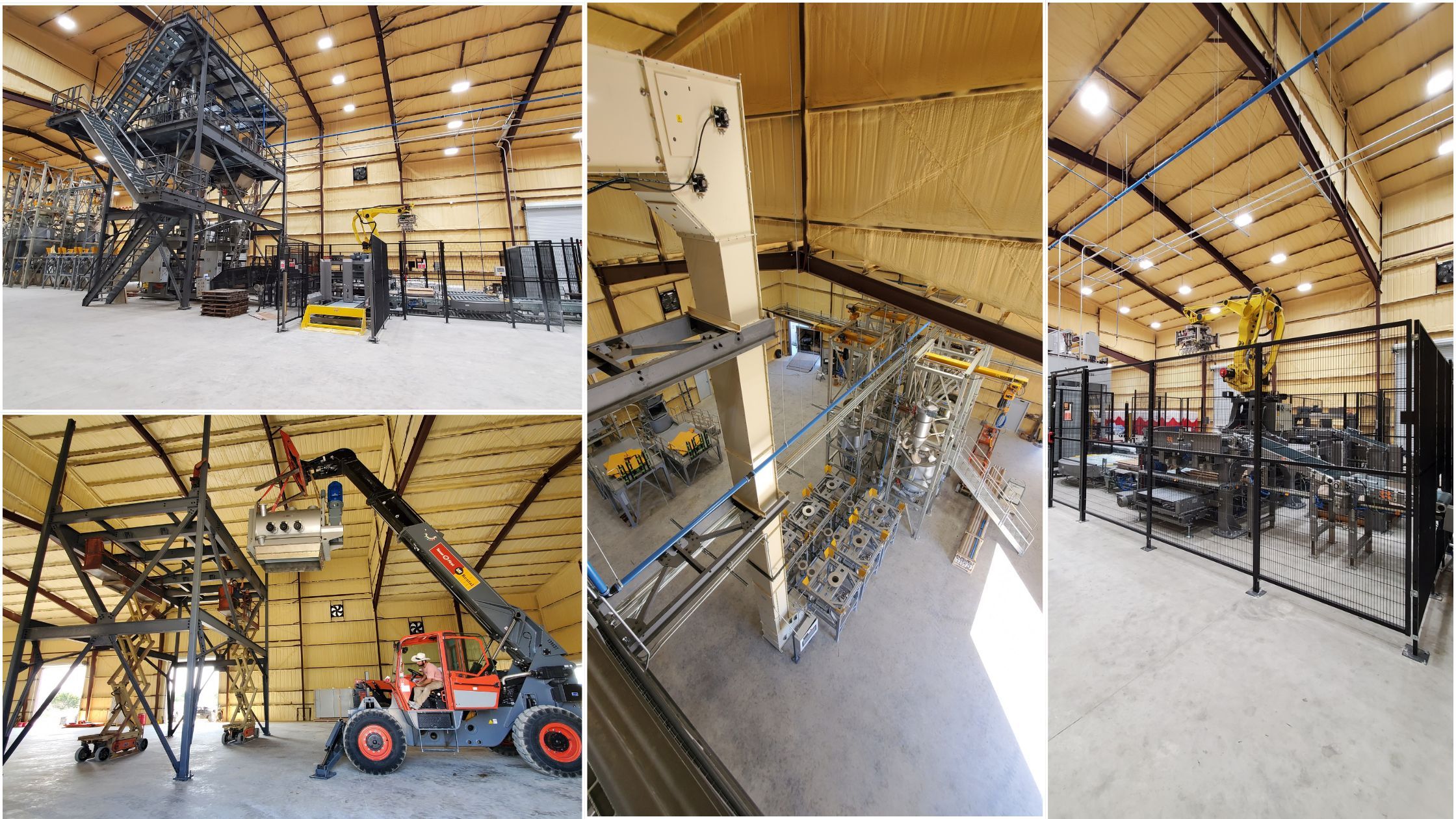
When production grows, adding more people to a manual process only goes so far.
That was the challenge facing DIJ Construction. The company manufactures thermoplastic striping material in addition to its road striping and chip sealing work. As contracts increased and its customer base grew, the existing production process was no longer enough.
The company needed substantially more throughput, but also wanted to reduce the amount of operator interaction and manual labor required to get the product out the door.
The Problem Was Bigger Than the Mixer
Before working with MIXSYS, DIJ Construction handled much of the production process manually.
Raw ingredients had to be handled, weighed, dosed and mixed by operators. The finished material was then manually bagged and palletized.
The equipment included bulk bag unloaders, smaller mixers, manual valve baggers and manual palletization. The problem was not simply the size or speed of one piece of equipment.
The process itself was disconnected.
Different parts of the operation required operators to handle material and move it from one step to the next. There was little automation between the stages, which made production tedious and time-consuming and ultimately put a ceiling on throughput.
DIJ needed a system that could handle more material while keeping the process consistent.
Designing the Plant Around the Entire Process
MIXSYS supplied a turnkey production plant that connected the major stages of the operation.
The system includes:
Raw material silo
Liquid storage tanks
Bulk bag unloaders
Smart Ingredient Systems
Hand add station
Tote filling station
Bucket elevator
Dedicated fast-batch mixers for each color
Two VFFS baggers
Robotic palletization system
Stretch hooder system
Instead of treating material handling, mixing, packaging and palletizing as separate operations, the system was designed to bring them together.
That connection was an important part of the solution.
Accurate Dosing for Multiple Ingredients
Thermoplastic striping material requires several different ingredients, each with its own dosing requirements.
The materials used in the process include calcium carbonate, resin, glass beads, titanium dioxide, pigment, oil and other micro ingredients.
MIXSYS incorporated its Smart Ingredient System to accurately batch the six required minor ingredients.
That gives DIJ a more repeatable way to handle those smaller ingredient additions from batch to batch. It also creates batch-level data that can be used to monitor consistency and improve raw material inventory control.
Two Production Lines, 24 Tons per Hour
The completed system is designed for a total production rate of 24 tons per hour, with 12 tons per hour per line.
Each mixer handles a 3,200-pound batch.
Dedicated fast-batch mixers for each color support production, while two VFFS baggers handle the finished product. Robotic palletization then removes another manual step from the process.
The result is a production system designed around the output DIJ needed rather than simply replacing one piece of its existing equipment.
Less Manual Labor
One of the biggest changes was the amount of labor required relative to production output.
The new system reduced head count per output by 30%.
That does not mean operators disappeared from the process. Instead, automation took over more of the repetitive material handling and production work, allowing fewer people to support a much higher production rate.
The system also provides more machine feedback. That gives operators greater visibility into system conditions and can help identify issues before they develop into larger production problems.
A Cleaner Process
Dust control was another benefit of the new system.
The operation achieves a nearly dust-free process, which can have a direct effect on both production and equipment.
Material that might otherwise be lost as waste can remain in the finished product. At the same time, controlling dust helps protect equipment and maintain batch integrity.
For a high-volume operation, those small losses can add up. Keeping more material in the process means more of the purchased raw material ends up where it belongs.
The Engineering Challenge
Projects like this are rarely just about putting equipment in a building.
Industrial production plants have to account for available space, recipe tolerances, material characteristics, installation schedules and the way every piece of equipment interacts with the next.
For DIJ Construction, one of the primary challenges was integrating ingredients with different dosing requirements without sacrificing accuracy or consistency.
The solution required more than a larger mixer or faster bagger. The material handling, dosing, mixing, packaging and palletizing systems all had to work as part of the same production process.
The Result
DIJ Construction went from a labor-intensive process with disconnected handling points to a turnkey production system capable of 24 tons per hour.
The new plant provides:
24 tons/hour total production
12 tons/hour per line
3,200-pound mixer batches
30% reduction in head count per output
More consistent minor-ingredient dosing
Per-batch production data
Improved raw material inventory control
Greater machine feedback
Nearly dust-free operation
Automated bagging and robotic palletization
The project gave DIJ Construction the production capacity and process control needed to support its growing thermoplastic striping material business.
For MIXSYS, the project is a good example of what happens when the focus moves beyond individual machines and looks at the entire production process.