April 20, 2026
Built to Run Together — Lemonade Production Skids in Action
This setup wasn’t just one skid dropped into a line.
It’s part of a group of skids working together to handle different steps in lemonade production. Each one has its job, and the system only works right when they all stay in sync.
The Sweetwater Skid — Where the Bulk Product Sits
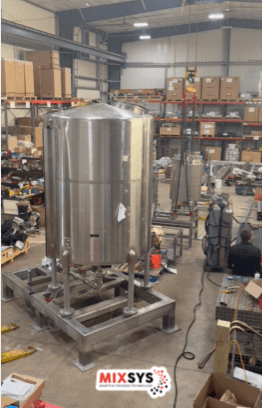
The larger skid carries most of the load.
A 1,500 gallon tank holds the lemonade before it moves to packaging. Inside, agitation keeps everything moving so the product stays consistent. No settling, no variation from one batch to the next.
There’s a positive displacement pump on a VFD, which gives control over how fast product moves out. That matters when you’re feeding packaging and need a steady, reliable flow.
The skid also has its own control panel, handling load cells and valve controls so operators know exactly what’s happening.
The Additive Makeup Skid — Small Tank, Important Job
The smaller skid handles ingredients that still need to be mixed before they go into the main product.
This one uses a 250 gallon tank where potassium sorbate and sodium benzoate are added into water.
RO water comes in from the top, and an agitator keeps things mixing fast so nothing clumps or lags behind.
A centrifugal pump on a VFD controls how that mixture feeds into the process. Same idea as the larger skid—keep it steady and predictable.
It also runs with its own control panel, tied into load cells and valve controls.
Designed to Drop Into Place
Both skids are built as turnkey units.
Hook up the piping. Tie into the plant’s control system. From there, they’re ready to run as part of the larger operation.
That’s the point of this kind of setup. Each skid handles a specific task, but they’re designed to work together without needing constant adjustment.
Why This Approach Works
Instead of one large system trying to do everything, breaking it into skids keeps things more controlled.
Bulk product stays consistent
Additives are mixed correctly before they enter the line
Flow rates stay controlled at each step
Operators have visibility into what’s happening