April 13, 2026
You Don’t Always Need New Equipment—Sometimes You Just Need a Better System
There’s a point where a line still runs… but not the way it used to.
Throughput drops a little. Operators have to step in more often. Maintenance gets more frequent. Nothing is completely down, but it’s not smooth either.
That’s usually when people start thinking about replacing everything.
In a lot of cases, that’s not necessary.
Where Modernization Actually Starts
Most older systems weren’t designed for what they’re being asked to do today.
Higher volumes. Different materials. Tighter specs. More automation. Over time, the gaps start to show up.
Material doesn’t flow the same. Feeding isn’t consistent. Dust becomes more of an issue. Components wear out faster.
Modernization is really about tightening those areas up—not tearing everything out.
Small Changes That Make a Big Difference
A lot of upgrades come down to components that don’t always get much attention.
Swapping in the right valves can improve flow control and reduce leakage.
Adding aeration flow aids can fix bridging and keep material moving.
Upgrading to a bin activator or live bottom extractor can stabilize feeding from storage.
Even something like a better point level indicator can take guesswork out of inventory and prevent overfilling.
Individually, these are small changes. Together, they change how the whole line runs.
Flow, Control, and Safety
Modernization isn’t just about speed. It’s also about control and safety.
Butterfly and slide gate valves help manage flow and isolation more reliably
Rotary valves and diverters improve how materials move between processes
Silo safety systems and pressure relief valves protect equipment and operators
Manways and access points make maintenance easier and faster
These upgrades don’t just improve performance—they make the system easier to live with day to day.
When It Turns Into a Bigger Upgrade
Sometimes it goes beyond components.
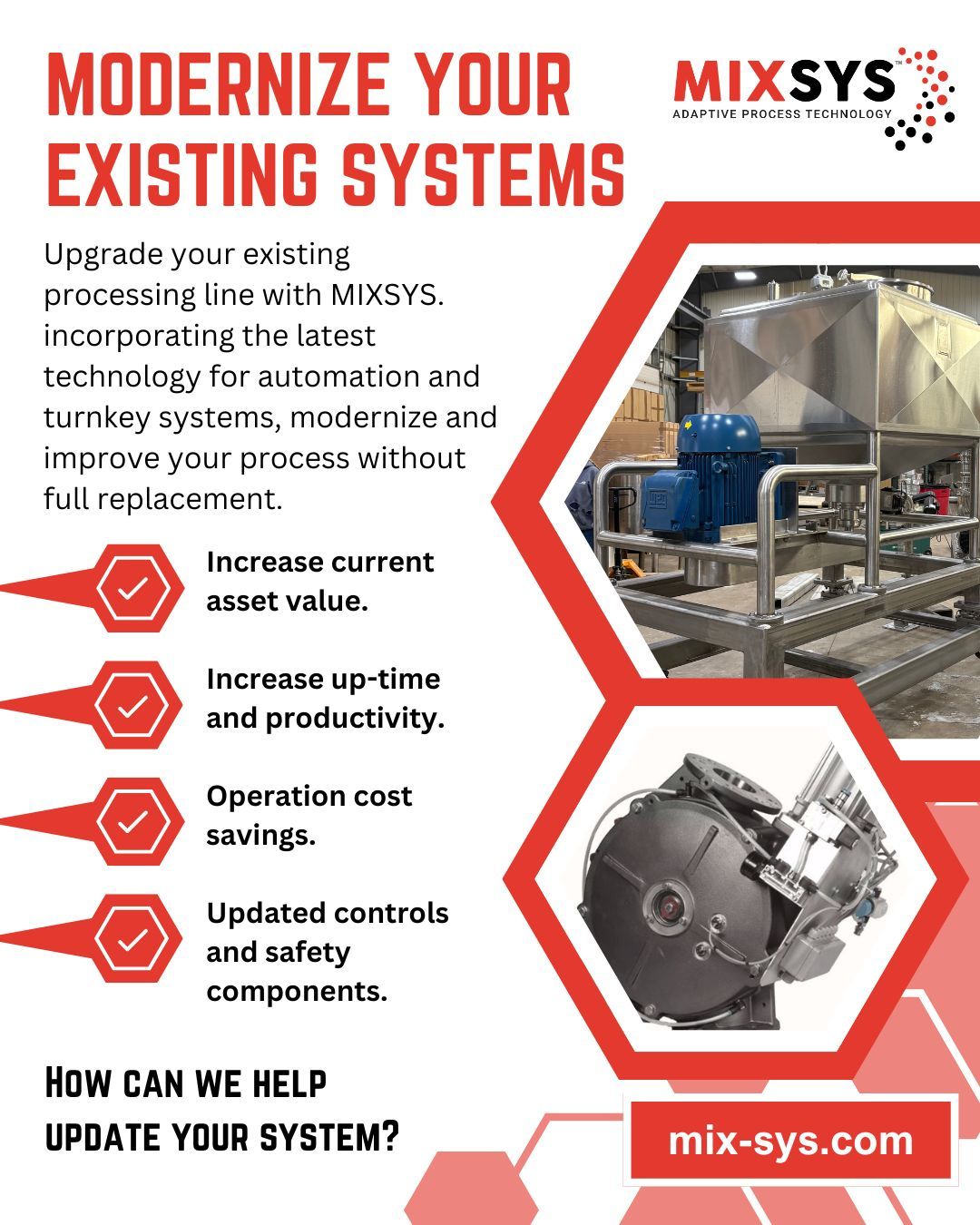
That’s where MIXSYS steps in with custom engineering and turnkey solutions. Instead of replacing everything, the focus is on improving what’s already there.
That might include:
Reworking material flow paths
Updating batching and control systems
Adding automation where it actually helps
Improving dust collection and environmental control
The goal is to bring the system up to current demands without starting from zero.
Keeping Production Moving While You Improve It
One of the biggest concerns with upgrades is downtime.
Modernization projects are usually handled in a way that keeps disruption as low as possible. Phased installs, targeted upgrades, working around production schedules—it’s all part of the process.
Because at the end of the day, the system still needs to run while it’s being improved.
Why More Companies Are Going This Route
Replacing a full system takes time, money, and planning.
Updating an existing one is often faster, more practical, and gets results where they’re actually needed.
Better flow.
More consistency.
Less manual intervention.
Fewer slowdowns.
That’s what most operations are after.
And a lot of the time, they’re closer to it than they think.