
July 6, 2026
Process and Packaging Solutions: Designing Manufacturing Systems That Work Together
Modern Production Requires More Than Individual Equipment
Manufacturing facilities are under constant pressure to increase output, maintain product quality, and improve efficiency. But many production challenges are not caused by a single machine. They develop when separate parts of the process are designed independently.
A mixer may have the capacity to meet production goals, but inconsistent material delivery can limit performance. A packaging system may be capable of higher speeds, but upstream equipment may not provide a steady supply of product. A storage system may hold enough material for production, but poor material flow can create delays throughout the facility.
The most efficient facilities are built around a connected approach: understanding how materials move, how processes interact, and how each stage supports the next.
That is where integrated process and packaging solutions make a difference.
Looking Beyond Individual Machines
For years, many manufacturing upgrades happened one project at a time.
A company expanded storage when demand increased. New mixing equipment was added to support higher volumes. Packaging machinery was replaced when existing equipment could no longer keep up. Each investment addressed an immediate need, but over time, the production process became a collection of separate systems rather than one coordinated operation.
Today, manufacturers are taking a different approach.
Instead of asking which machine needs to be replaced, they are examining the entire production flow. This allows engineers to identify where materials slow down, where operators spend unnecessary time managing processes, and where equipment may not be working together as efficiently as possible.
A complete process solution considers every stage — from receiving raw materials to shipping finished products.
Every Stage of Production Influences the Next
A successful packaging operation begins long before the product reaches the bagger.
Bulk materials must first be received and stored properly. Conveying systems must move ingredients consistently. Mixing and processing equipment must maintain product quality and repeatability. Automation and controls must help coordinate each step.
When these systems are designed together, manufacturers gain better visibility into their operations and greater control over production.
For example, a facility handling powdered ingredients may require more than a high-speed packaging machine. The complete solution may involve bulk unloading, fabric silos, material transfer systems, mixing equipment, dust control, and automated packaging. Each component plays a role in maintaining a reliable production cycle.
The final package is only as consistent as the process behind it.
Engineering Around Production Goals
Every facility has different requirements.
Material characteristics, production volume, available space, labor needs, sanitation standards, and future expansion plans all influence how a system should be designed. A solution that works for one manufacturer may not be the right fit for another.
Effective process engineering starts by understanding the end goal.
How much product needs to move through the facility? What level of automation is needed? How should materials be stored and transferred? Where are current bottlenecks occurring? What changes will the business need to support future growth?
Answering these questions creates a foundation for designing equipment around the actual needs of the operation.
The Value of a Complete System Approach
When process and packaging equipment are designed as one system, manufacturers can improve more than just production speed.
A connected approach can help reduce unnecessary handling, create more consistent product flow, simplify operation, and provide a clearer path for future improvements.
It also allows engineers to consider challenges that may not be obvious when looking at individual machines. Material behavior, facility layout, automation requirements, and maintenance needs all impact how well a production system performs.
The strongest solutions are not simply collections of equipment. They are carefully engineered systems built around how a facility actually operates.
Building Smarter Production Facilities
As manufacturing continues to evolve, companies are looking for ways to produce more efficiently while maintaining quality and flexibility. The answer is not always adding another machine. Often, it starts with understanding how the entire process works together.
From bulk material handling and storage to mixing, automation, and final packaging, integrated solutions give manufacturers the ability to build production systems prepared for current demands and future growth.
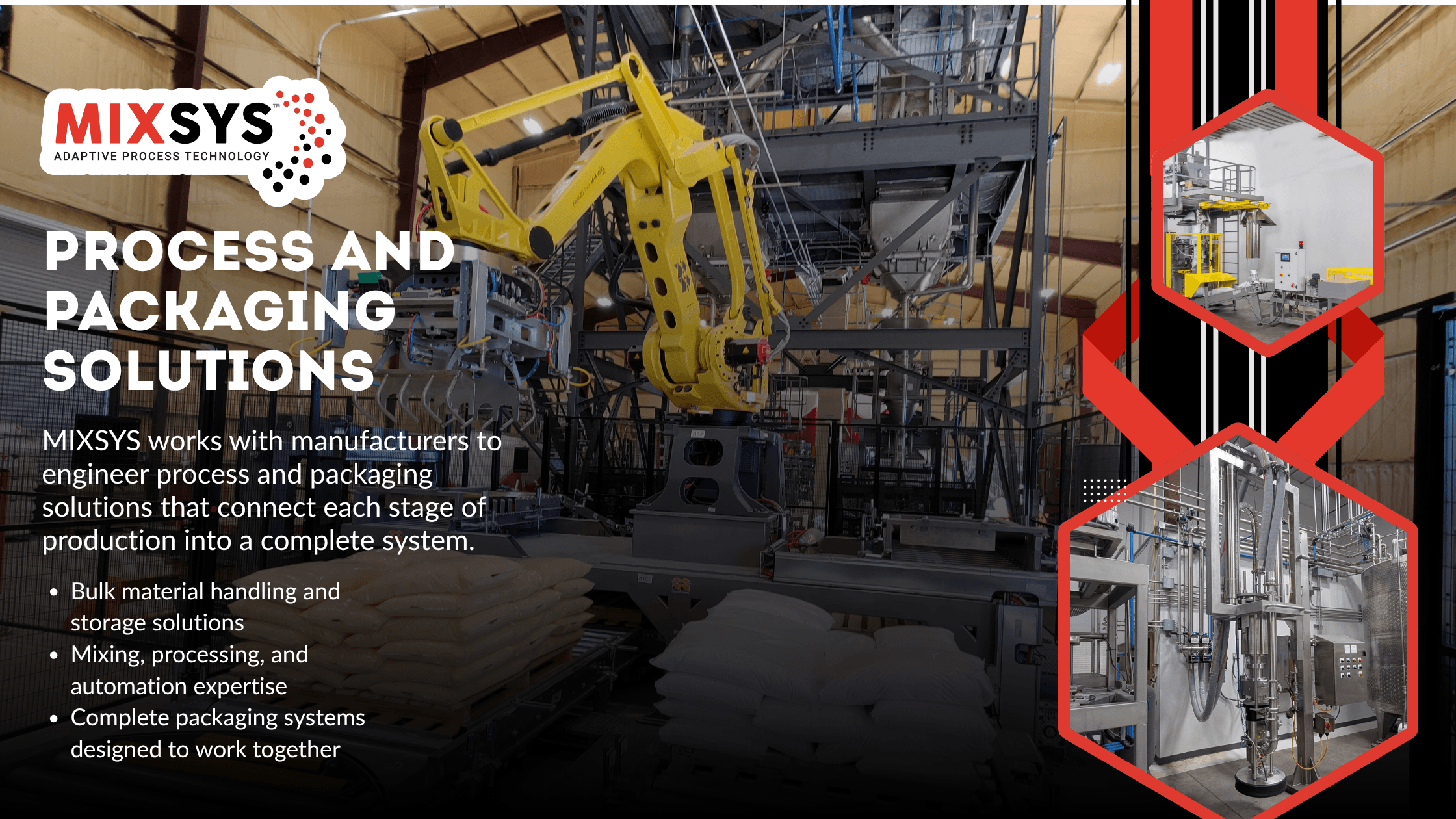
MIXSYS designs process and packaging solutions that connect each stage of production into one coordinated system. By combining engineering expertise with a complete understanding of material flow, MIXSYS helps manufacturers create efficient, reliable operations from receiving through finished product packaging.
Contact MIXSYS to discuss your process and packaging requirements and explore a solution designed around your production goals.